

Why Is My Mazda Making a Clicking Noise?
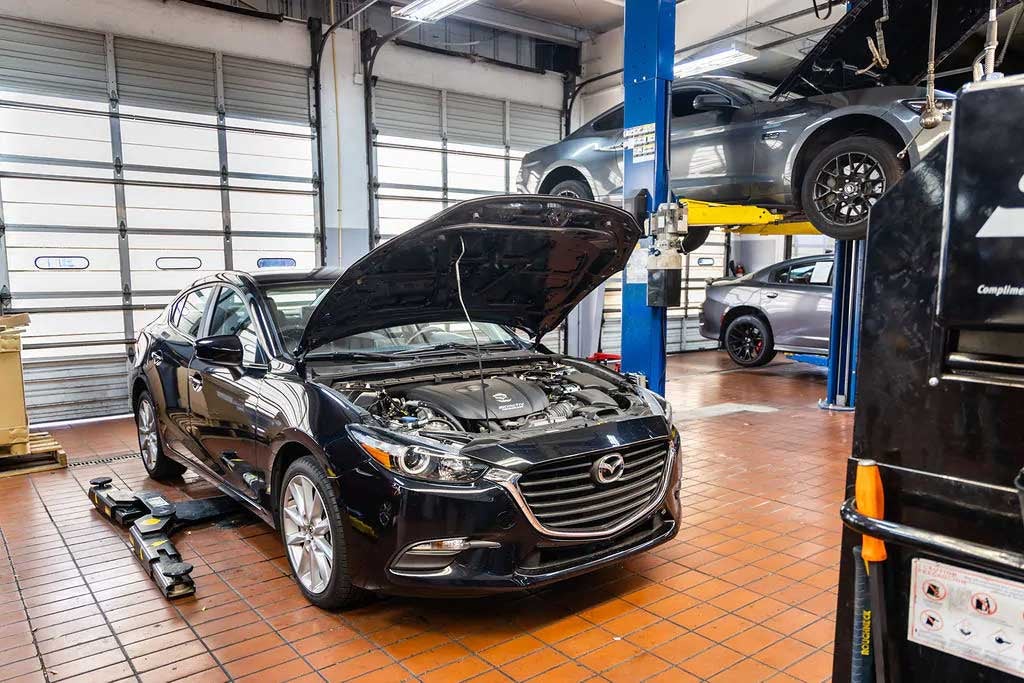
A clicking noise from your Mazda can mean very different things depending on when it happens. A click when you turn points toward a different area than rapid clicking when you press the start button, while a noise over bumps may come from the suspension rather than the engine.
For drivers around Portsmouth, Dover, Exeter, Hampton, and the wider Seacoast region, road salt, potholes, wet weather, and winter temperatures can expose worn parts. The key clue is when the clicking starts, where it comes from, and whether anything else changes at the same time.
What Does a Clicking Noise From a Mazda Usually Mean?
Clicking is a symptom, not a diagnosis. It can come from the battery or starter, a CV joint, suspension hardware, brakes, an engine component, or even a normal system operating as designed.
Note what the vehicle is doing when you hear it. Does it happen only while starting, during turns, over bumps, or with the engine running? Does it speed up with vehicle speed or engine rpm?
Why Does My Mazda Click When I Try to Start It?
Rapid clicking when you try to start your Mazda often points to low battery voltage or a poor battery connection. The starter solenoid may be engaging repeatedly without receiving enough power to turn the engine.
A single solid click with no cranking can involve the starter, starter solenoid, battery cables, or another part of the starting circuit.
Cold New Hampshire mornings can expose a weak battery because low temperatures reduce available battery performance. If the interior lights dim heavily when you try to start, that is another clue that the electrical system needs attention.
Battery testing, terminal inspection, and starter-system diagnosis can separate a weak battery from a failing starter.
Why Does My Mazda Click When I Turn?
A repetitive clicking or popping noise during tight turns is a classic sign of CV joint wear, particularly an outer CV joint. CV joints allow the drive axles to transmit power while the wheels move through steering and suspension angles.
The sound is often easier to hear during slow, sharp turns. A torn CV boot can allow protective grease to escape and dirt or water to enter the joint, accelerating wear.
You may also notice grease around the inside of a wheel. Once a CV joint begins clicking consistently, it should be inspected.
On 2024–2026 CX-50 and CX-30 models and 2025–2026 CX-50 Hybrid models built before November 15, 2025, a front click when accelerating through a turn is a known driveshaft issue. The repair is replacement of the affected driveshaft after diagnosis, with normal warranty coverage applying.
Why Does My Mazda Click When I Accelerate or Slow Down?
A click or clunk that appears when you accelerate, lift off the throttle, or move between forward and reverse can point toward play in a CV joint or another driveline component.
Axles, engine or transmission mounts, differential components, and other connections can create noises when load changes direction.
Pay attention to whether the sound happens once as power is applied or repeats while driving. A technician can inspect for excess movement, damaged boots, worn joints, or loose components.
Why Does My Mazda Click Over Bumps?
Clicking, knocking, or light clunking over potholes and uneven pavement usually shifts the investigation toward the steering and suspension.
Possible causes include worn sway bar links, bushings, strut mounts, ball joints, or loose suspension hardware.
Seacoast-area roads can be hard on suspension components after repeated winter freeze-thaw cycles. A noise that starts after pothole season, becomes more noticeable on broken pavement, or comes with loose steering or unusual tire wear deserves an inspection.
Can My Mazda's Brakes Make a Clicking Noise?
They can. Clicking during braking may come from brake pads or hardware moving within the caliper assembly, a loose component, or another issue around the wheel and brake system.
If the sound happens only when you press or release the brake pedal, mention that during diagnosis. If you also notice reduced braking performance, vibration, pulling, a brake warning, or grinding, the vehicle should be checked promptly.
Some brake noises occur in certain weather conditions, but a new persistent click should not be assumed to be normal.
Why Is There a Clicking or Ticking Noise From the Engine?
Some engine-area ticking is normal. Fuel injectors and other components can make rhythmic operating sounds, particularly on modern direct-injection engines.
A new or louder noise, especially with rough running, warning lights, low oil pressure, or reduced performance, deserves attention. Low engine oil, valvetrain problems, accessory-drive components, or another mechanical issue can produce ticking or clicking sounds.
Check the engine-oil level according to the owner’s manual if you suspect an engine-area noise. If the engine oil warning light comes on, pull over safely and turn off the engine.
Can a Mazda Hybrid Make Normal Clicking Sounds?
Hybrid models can make sounds that are less familiar from a gas-only model, such as the engine starting or stopping on its own while you drive.
A normal operational sound should be consistent and should not arrive with warning messages, poor performance, or a sudden change in vehicle behavior.
If a clicking sound is new or difficult to identify, an inspection can distinguish normal operation from a developing fault. A click when accelerating through a turn is not one of those normal sounds; see the CV joint section above.
When Is a Clicking Noise an Urgent Problem?
Arrange service promptly if the clicking comes with:
- Difficulty starting or repeated no-start conditions
- Steering that feels loose, heavy, or unusual
- Vibration or pulling while braking
- A brake system, engine oil, charging system, or other warning light
- Grease around a wheel or a damaged CV boot
- Grinding, severe clunking, or rapidly worsening noise
- A noticeable change in handling or acceleration
If braking or steering feels unsafe, or the engine oil warning light comes on, stop driving and arrange assistance.
Where Can You Get a Mazda Clicking Noise Diagnosed in Portsmouth, NH?
A clicking noise becomes easier to diagnose when you can describe exactly when it occurs. Before your appointment, note whether it happens during starting, turning, braking, acceleration, bumps, or idling and whether it changes with speed or temperature.
At Seacoast Mazda in Portsmouth, our technicians can inspect the starting and charging system, brakes, CV axles, steering, suspension, engine components, and other likely sources. We can identify the cause before recommending a repair, helping drivers across the Seacoast fix the actual problem instead of replacing parts based on the sound alone.
Schedule Service