Blog

The Most Fuel-Efficient Mazda Vehicles

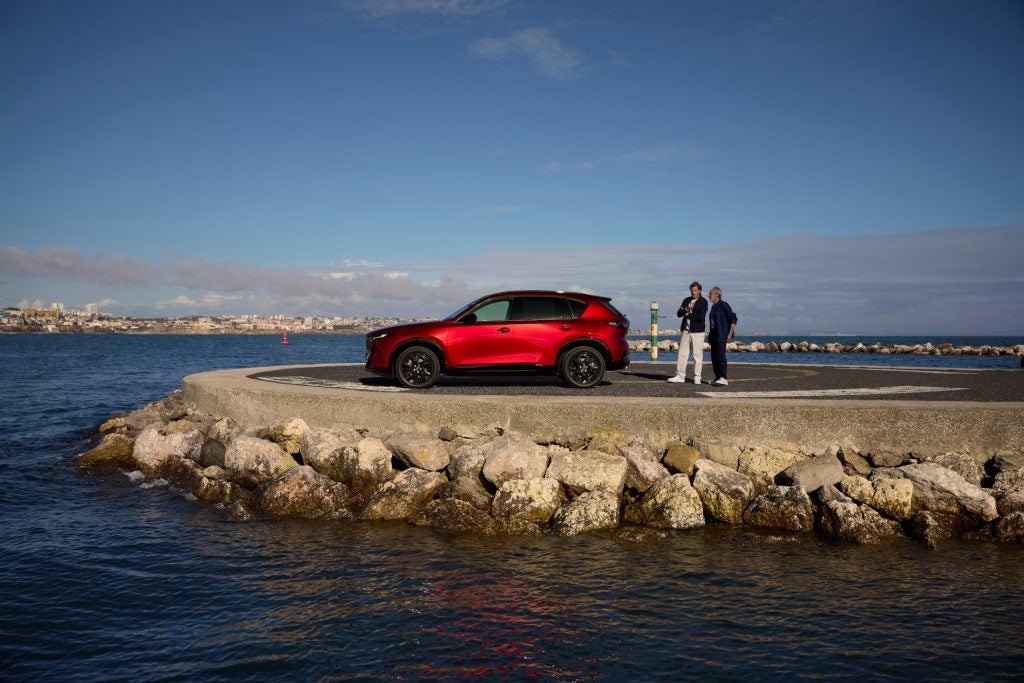
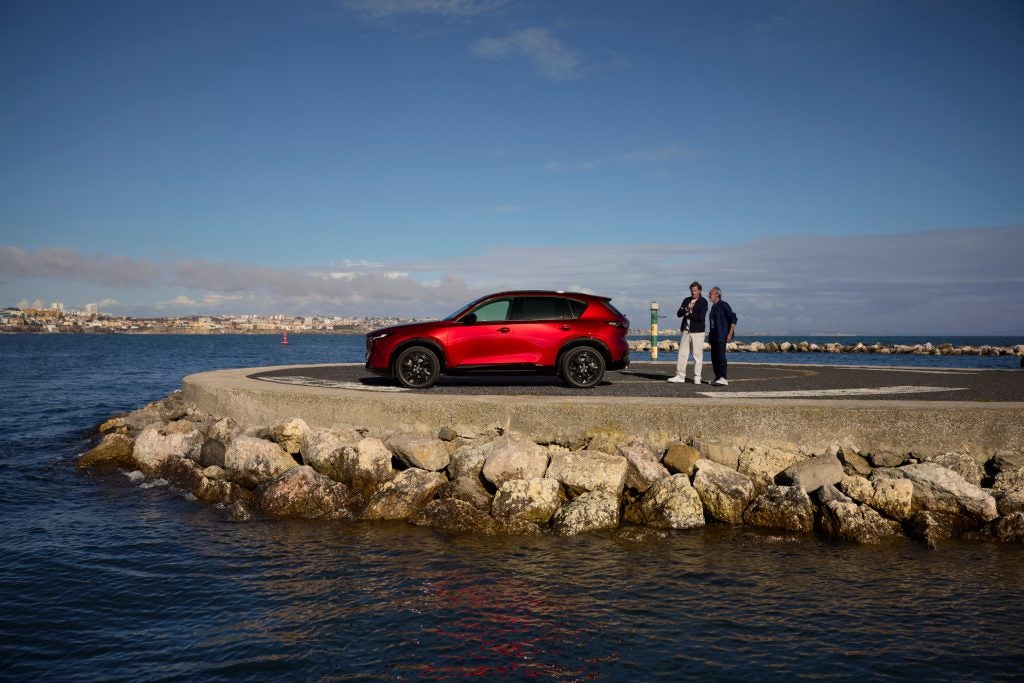
The 2026 Mazda CX-5, one of the best Mazda models for fuel economy

Commuting in New Hampshire means balancing highway miles, stop-and-go traffic, winter weather, and rising fuel costs. If you're searching for the Mazda best fuel economy models, several vehicles stand out for delivering excellent efficiency without sacrificing comfort or all-season confidence.

Below, we break down the best Mazda vehicles for fuel efficiency and everyday commuting.

Which Mazda Sedan Offers the Best Fuel Economy for Commuting?

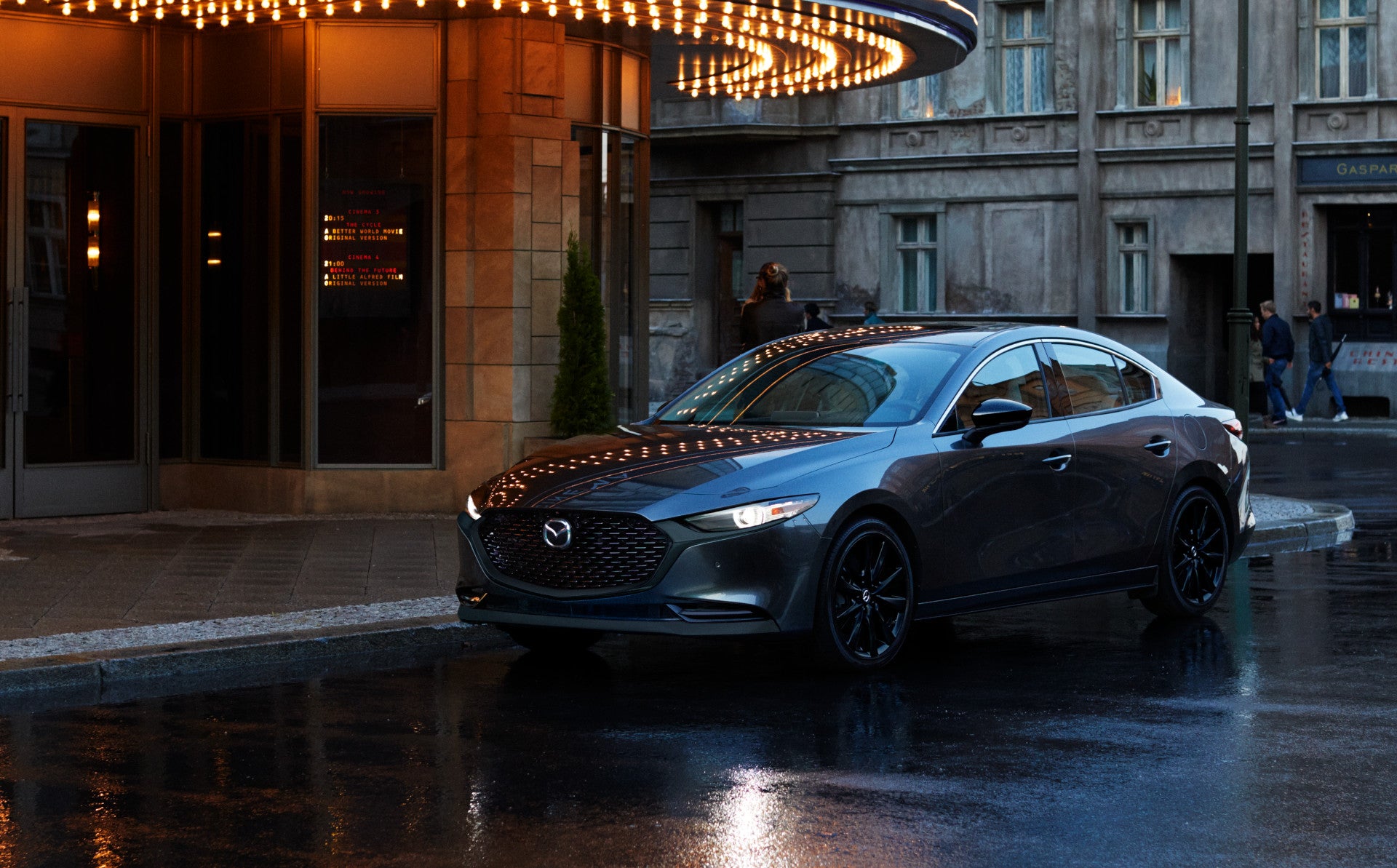
The Mazda3 Sedan remains one of the strongest choices for commuters focused on maximizing miles per gallon. For drivers researching Mazda best fuel economy options, the Mazda3 stands out with EPA estimates reaching up to 27 mpg city and 36 mpg highway in front-wheel-drive configurations, the Mazda3 delivers impressive efficiency for a compact sedan.

Why does it work so well for commuting?

  • Lightweight design improves fuel economy
  • Responsive 2.5-liter engine balances power and efficiency
  • Comfortable front seating for longer drives
  • Compact size makes parking easier in busy areas

For drivers commuting along I-95, Route 101, or into Portsmouth or Manchester, the Mazda3 offers a refined ride and strong highway efficiency without feeling underpowered.

Is the Mazda CX-30 One of the Best Fuel Economy Mazda SUVs?

If you prefer SUV versatility but still want competitive fuel economy, the Mazda CX-30 is a smart middle ground. Drivers comparing Mazda best fuel economy SUVs will appreciate that front-wheel-drive models offer fuel economy in the mid-to-high 20s combined, while still providing available all-wheel drive for winter driving confidence.

New Hampshire drivers often value:

  • Higher ground clearance than a sedan
  • Available AWD for snow and rain
  • Compact footprint for easy city maneuvering

The CX-30 is ideal for commuters who deal with changing road conditions but don’t need a larger SUV.

Which Mazda SUV Balances Fuel Economy and Interior Space?

The Mazda CX-5 continues to be one of Mazda’s most popular commuter-friendly SUVs. While it is larger than the Mazda3 or CX-30, it still ranks among the vehicles considered when discussing Mazda best fuel economy options. With EPA ratings reaching approximately 26 mpg city and 31 mpg highway, the CX-5 provides solid efficiency alongside generous interior space.

Why choose the CX-5 for commuting?

  • Comfortable, supportive seats for longer drives
  • Quiet cabin that reduces road noise
  • Available AWD for year-round traction
  • Cargo space for work gear, groceries, or weekend travel

For drivers commuting from surrounding towns into Seacoast communities, the CX-5 offers versatility without significantly increasing fuel costs.

Is there a Mazda hybrid option for maximum fuel savings?

Mazda has begun expanding hybrid options in its lineup, including hybrid variants of models like the CX-90. For shoppers focused on Mazda best fuel economy performance in city driving, hybrid models can significantly improve efficiency by assisting the gas engine during low-speed driving and stop-and-go traffic.

For commuters who spend significant time in traffic, a hybrid configuration can reduce fuel consumption while still maintaining SUV practicality.

What makes Mazda vehicles well-suited for New Hampshire commuting?

Fuel efficiency is only part of the equation. Mazda vehicles also offer:

  • Standard or available all-wheel drive on many models
  • Strong safety technology, including adaptive cruise control
  • Comfortable interiors designed for daily use
  • Reliable performance in varying seasonal conditions

New Hampshire drivers face snow, rain, coastal weather, and highway miles. Mazda models balance efficiency with real-world drivability.

What Is the Best Mazda for Fuel Economy and Your Daily Commute?

The best choice depends on your daily routine. If maximizing mpg is your priority, the Mazda3 Sedan remains one of the strongest Mazda best fuel economy choices available. If you want SUV practicality with solid efficiency, the CX-30 or CX-5 are excellent options. For drivers seeking the highest fuel savings in city traffic, Mazda's hybrid models are also worth considering.

The key is matching your commute length, road conditions, and cargo needs to the right model.

Find Your Fuel Efficient Mazda at Seacoast Mazda

If you’re searching for a fuel-efficient Mazda built for New Hampshire roads, visit Seacoast Mazda. Our team can help you compare models, explore available trims, and schedule a test drive so you can find the perfect balance of efficiency, comfort, and confidence for your daily commute.

Recommended Posts

The 2024 Mazda CX-90

Top Mazda SUVs for Summer Road Trips: Comfort, MPG & Cargo Space Compared

There's something for everybody in Mazda's outstanding family of SUVs, meeting all types of household budgets and the family’s summer road trip requirements. Mazda SUV models differ in comfort features, MPG, and cargo space, so for the astute buyer, making comparisons is always a good idea before pulling the trigger on a particular model. What are the current Mazda SUV models? The smallest of Mazda’s SUVs is the subcompact crossover Mazda CX-30. The CX-5 and the more off-road-ready CX-50 compete in the compact SUV segment, while the largest Mazda SUVs are the midsize CX-70 and CX-90. Mazda SUV comfort comparisons Mazda has always taken passenger comfort seriously, with all models offering stylish premium interiors, high build quality, quality materials, and plenty of comfort and luxury features. The CX-30, CX-5, CX-50, and CX-70 all seat up to five passengers in two rows, with the CX-90 being the sole three-row seater that accommodates up to eight passengers. For the ultimate in comfort and space for summer road trips, buyers should look to the CX-70, which shares the CX-90’s dimensions but seats only five passengers, freeing up interior passenger space. Standard comfort features across all SUV models include the following usual expected items and more: Air conditioning Power windows Power door locks Up-to-date modern Infotainment systems Bluetooth® hands-free phone and audio capability Wireless Apple CarPlay® integration and Wireless Android Auto™compatibility Steering-wheel-mounted audio, phone, and cruise controls Our table below makes it easy to compare passenger space in cubic feet by model. CX-30 CX-5 CX-50 CX-70 CX-90 94.1 106.5 100.3 141.6 141.6 Which Mazda SUV is the most fuel-efficient? Rising fuel costs put pressure on often static household budgets, so choosing a Mazda SUV that fits your summer road trip travel budget is important. All Mazda SUV models are powered by naturally aspirated or turbocharged gasoline engines, with the CX-50, CX-70, and CX-90 also available as Hybrid models, and the CX-70 and CX-90 offering a PHEV option. A quick look at each model’s estimated EPA combined mpg will give you an idea of what to expect. CX-30 Naturally aspirated / Turbocharged CX-5 Naturally aspirated / Turbocharged CX-50 Naturally aspirated / Turbocharged / HYBRID CX-70 HYBRID/PHEV CX-90/HYBRID/PHEV 28.0 / 25.0 28.0 / 25.0 28.0 / 25.0 / 38.0 25.0 / 56 MPGe in gasoline and electric mode 25.0 / 56 MPGe in gasoline and electric mode Cargo space comparison There's really no point in hitting the road for your summer road trip if your car can't carry all your luggage. With a wide range of models, the Mazda SUV lineup matches cargo space needs to budgets. With all seating positions occupied, each model offers the following primary cargo space behind the last row of seats, measured in cubic feet, with the CX-70 being the top pick. CX-30 CX-5 CX-50 CX-70 CX-90 20.2 30.9 31.4 39.6 15.9 Discover the Mazda SUV models lineup at Seacoast Mazda Find out more about the Mazda SUV models lineup at Seacoast Mazda. With all the latest Mazda models to discover and an impressive selection of quality pre-owned vehicles, Seacoast Mazda will meet all your summer road-trip motoring needs. Explore New Mazda Vehicles

The 2026 Mazda CX-5

Why All-Wheel Drive Is a Smart Choice for New Hampshire Drivers

New Hampshire driving rarely stays simple for long. A normal week can mean wet pavement in Portsmouth, slush on side roads, uneven backroad surfaces inland, and icy early-morning commutes when temperatures drop overnight. That’s why all-wheel drive is such a practical choice for local drivers. It is not just a winter feature. It is a year-round advantage for people who want their vehicle to feel stable and predictable in changing conditions. What does all-wheel drive actually do? All-wheel drive sends power to all four wheels instead of relying on only the front or rear axle. In real-world driving, that helps the vehicle maintain traction when one wheel starts to lose grip. Rather than waiting for obvious slipping, modern systems can adjust power delivery automatically to help the vehicle stay composed. For drivers, that usually shows up in very ordinary moments: pulling away from a wet intersection, climbing a snowy hill, turning onto a slick road, or driving through a stretch of pavement where grip changes from one lane to the next. Why is AWD especially useful in New Hampshire? Because New Hampshire roads and weather are inconsistent. Winter is the obvious example, but it is not the only one. Spring brings mud, potholes, and broken pavement. Summer means heavy rain and standing water. Fall often leaves roads covered in wet leaves, which can be surprisingly slick. Drivers also move between very different road types in a single day. You might start on a well-traveled main road, cut through a residential area, merge onto I-95, then end up on a rougher backroad or gravel driveway. All-wheel drive helps make those transitions feel less dramatic. How does Mazda’s i-Activ AWD system help? Mazda’s i-Activ AWD system is designed to work proactively. It monitors driving conditions and adjusts torque distribution automatically so the vehicle stays balanced and controlled. The benefit is not just extra grip in bad weather. It is smoother, more confident driving when road conditions are mixed or unpredictable. That fits New Hampshire well. Roads here are not challenging only when there is a major storm. They can be damp, uneven, partially frozen, or simply inconsistent. A system that responds quietly in the background makes daily driving feel more secure without making the vehicle feel heavy or cumbersome. Is AWD only worth having in winter? No. Winter is the biggest reason many drivers shop for it, but AWD is useful any time traction is less than ideal. It can help in heavy rain, on dirt or gravel roads, and during muddy spring conditions. It is also a good fit for drivers who spend weekends heading to campgrounds, trailheads, or beach areas where surfaces are less predictable than a smooth parking lot. Is AWD the right choice for your next vehicle? For many New Hampshire drivers, yes. It supports daily commuting, weekend travel, and four-season driving without asking you to change how you use your vehicle. It does not replace careful driving or good tires, but it does give you extra confidence when conditions are less than perfect. Explore AWD Mazda Models at Seacoast Mazda If you are looking for a vehicle that feels ready for New Hampshire weather, visit Seacoast Mazda to explore Mazda models with available i-Activ AWD. Our team can help you compare options, answer questions, and schedule a test drive so you can find the right fit for your everyday driving. Explore New Mazda Vehicles

2021 CX-9 Carbon Edition Spotlight

Mazda Fuel Economy Tips for Summer Driving in New England (Save Gas on Road Trips)

Summer road trips around New England can be some of the best driving of the year, but they can also burn through more fuel than many drivers expect. Between beach traffic near Portsmouth, highway miles on I-95, stop-and-go stretches on Route 1, and a fully loaded vehicle packed for vacation, fuel economy can drop quickly. The good news is that a few smart habits can help your Mazda go farther on every tank. How can you improve fuel economy before your trip starts? Start with the basics. Tire pressure has a direct effect on fuel economy, and warmer weather can make pressures fluctuate more than drivers realize. Tires that are underinflated create extra rolling resistance, which means your engine has to work harder. Check your pressures before you leave and make sure they match the recommended levels on the driver’s door sticker. It also helps to clear out unnecessary weight. Extra cargo, unused gear, and heavy items left in the trunk or cargo area all force the vehicle to use more fuel. If you are taking a weekend trip to Maine or heading deeper into New England, pack what you need and leave the rest behind. Does speed make a big difference on summer drives? Yes. Highway speed has one of the biggest effects on fuel economy. Once speeds climb, wind resistance rises quickly, and your Mazda has to use more energy to maintain pace. Steady cruising is more efficient than constant speeding up and slowing down. That does not mean driving painfully slow. It means avoiding the habit of pushing well beyond the flow of traffic. On longer drives through New Hampshire and along the coast, smoother speed control usually saves more fuel than aggressive driving ever will. What driving habits waste gas in summer traffic? Rapid acceleration and hard braking are two of the biggest culprits. Heavy summer traffic around Portsmouth, Hampton, and the Seacoast makes it easy to fall into a pattern of rushing forward and braking late. A calmer approach helps preserve fuel and makes the drive less stressful. Try to leave more space between vehicles, coast when traffic is clearly slowing, and accelerate smoothly from stops. Those habits are especially useful on crowded summer weekends when traffic backs up near beaches, outlet areas, and major route changes. Does using the air conditioning hurt fuel economy? It can, but usually not as much as people fear. Air conditioning does put extra load on the engine, especially in stop-and-go traffic, but driving with the windows down at highway speed also creates drag. In town, open windows may be fine. On the highway, using the air conditioning is often the more efficient choice. How can you keep your Mazda efficient all summer? Routine maintenance helps more than many drivers realize. Clean air filters, fresh oil, proper alignment, and a healthy engine all support better efficiency. If your Mazda is due for service before a long summer trip, taking care of it first can help you avoid both wasted fuel and unnecessary headaches. Get Your Mazda Summer-Ready at Seacoast Mazda If you are planning summer drives around New Hampshire, Southern Maine, or anywhere else in New England, visit Seacoast Mazda before you hit the road. Our team can help with maintenance, tire checks, and seasonal service so your Mazda is ready to travel farther and drive more efficiently all summer long. Schedule a Service Appointment