

5 Reasons Your ABS Light Won't Turn off
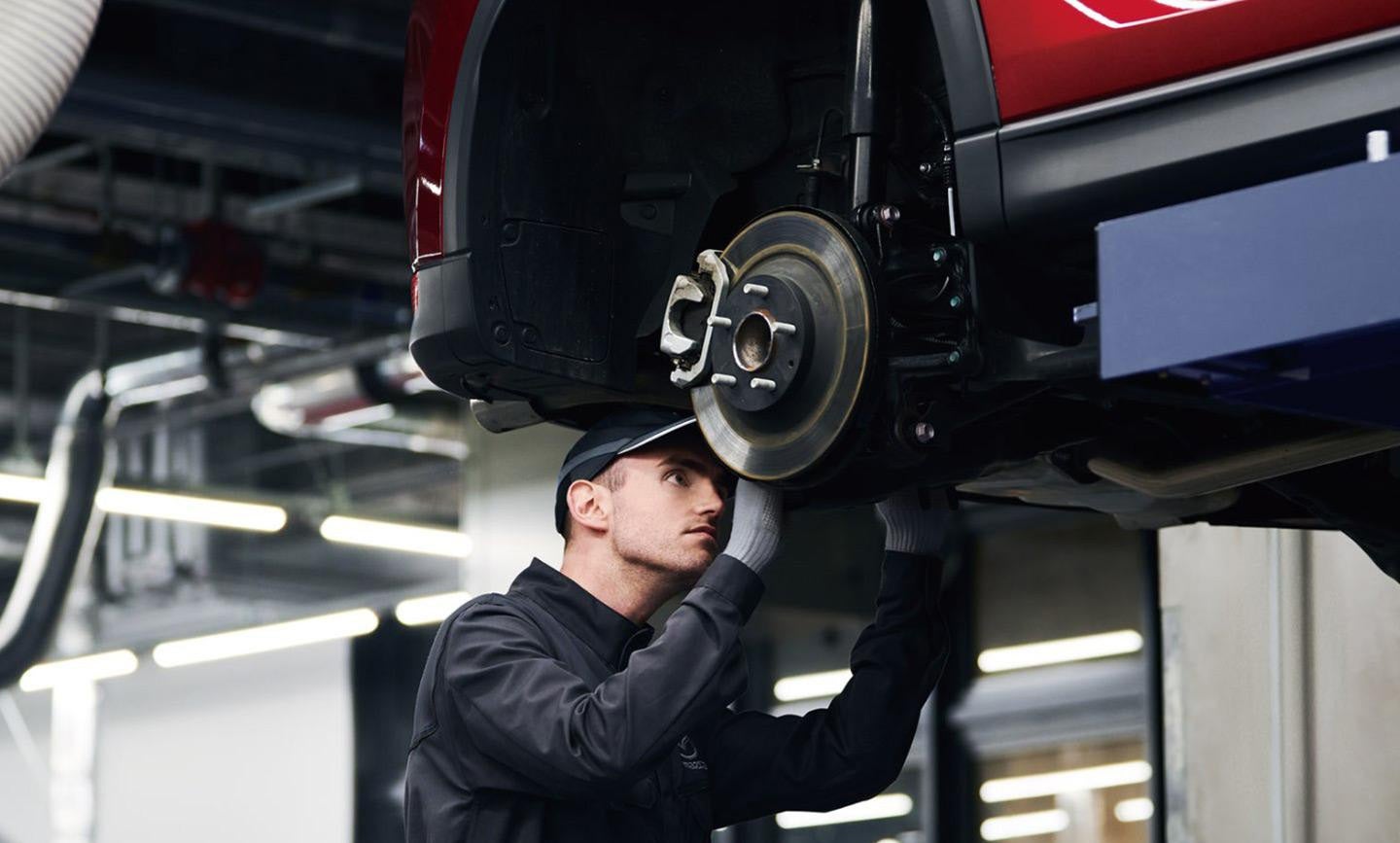
Seeing the ABS light stay on in your Mazda can be unsettling — especially when everything else seems to be driving normally. Many drivers assume it’s a minor glitch and keep going, while others worry that their brakes are about to fail entirely. The truth sits somewhere in between.
If your ABS light won’t turn off, your vehicle is telling you something important about its braking and safety systems. Here’s what that light actually means, what could be causing it, and when it’s time to bring your Mazda in for service.
What are the most common reasons the ABS light won’t turn off?
1. Faulty wheel speed sensors
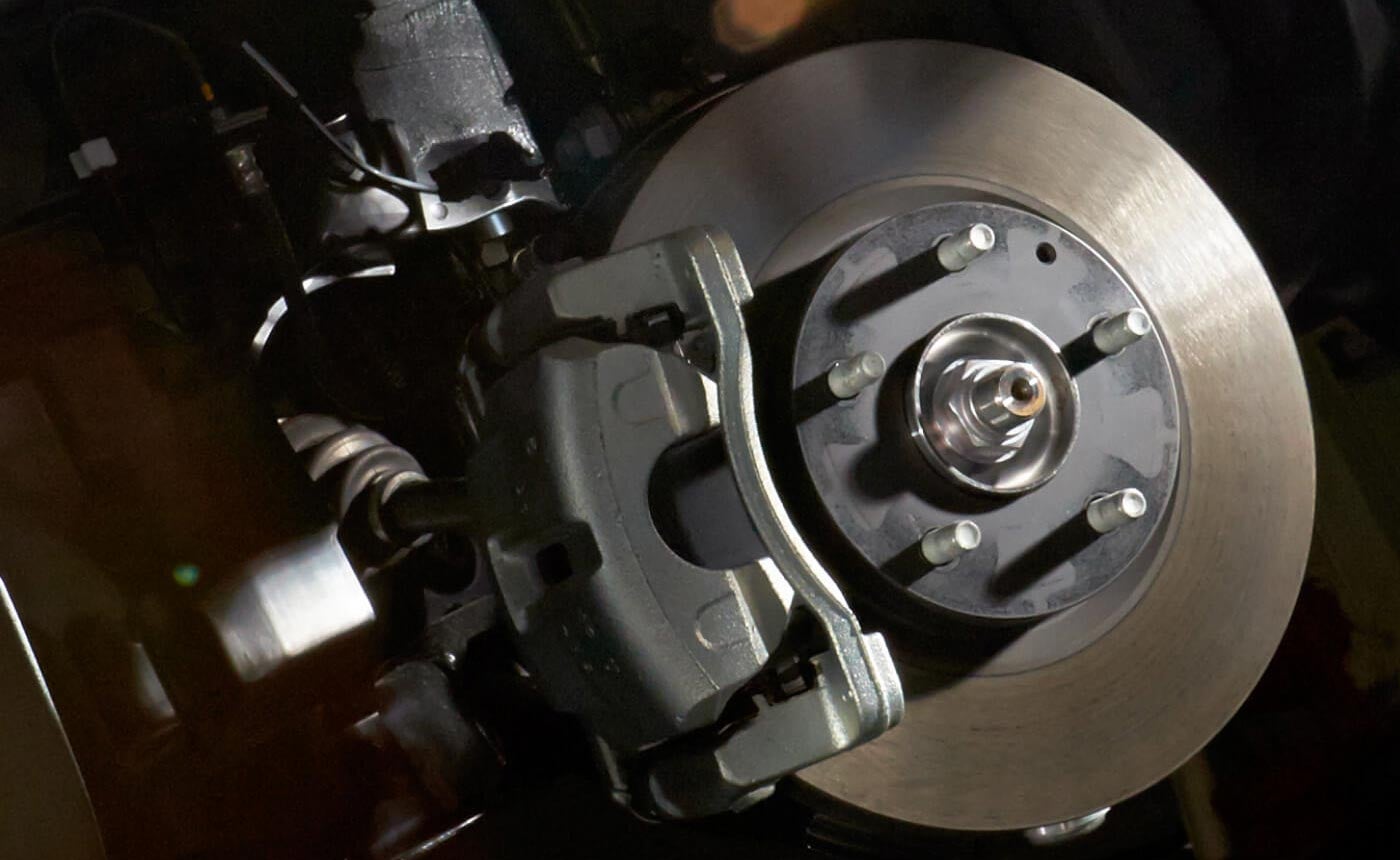
Each wheel has a speed sensor that monitors how fast it’s rotating. These sensors allow the ABS system to detect wheel lockup.
Road salt, dirt, snow, or debris can damage or block these sensors — a common issue in New England. When a sensor sends incorrect data or stops communicating, the ABS system shuts itself off as a safety measure.
2. Damaged ABS wiring or connectors
Even if the sensor itself is fine, damaged wiring can cause the same warning light. Corrosion, vibration, or physical wear can interrupt the signal between the wheel sensors and the ABS control module.
This type of issue is especially common on vehicles exposed to winter road conditions year after year.
3. Low brake fluid level
Brake fluid plays a vital role in both standard braking and ABS operation. If fluid levels drop too low — whether due to normal wear or a small leak — the system may cause the ABS light to not turn off.
Low fluid can also indicate:
- Worn brake pads
- Caliper issues
- Minor leaks that haven’t yet affected braking feel
This is one of the easier issues to fix, but it shouldn’t be ignored.
4. ABS control module problems
The ABS module is the system’s “brain,” processing sensor data and controlling brake pressure during emergency stops. Over time, internal electronic components can fail.
When the module isn’t functioning correctly, the ABS system disables itself and triggers the warning light. Diagnosing module issues requires professional scanning tools and system testing.
5. Battery or electrical system issues
ABS systems are sensitive to voltage changes. A weak battery, failing alternator, or recent battery replacement can cause temporary ABS faults.
If your ABS light appeared shortly after a dead battery, jump-start, or electrical repair, it may simply need to be reset — but only after confirming the charging system is healthy.
What is ABS, and why does it matter?
ABS stands for Anti-lock Braking System. Its job is to prevent your wheels from locking up during hard braking, especially on slippery surfaces like wet roads, snow, or ice. Instead of skidding, ABS rapidly pulses the brakes, helping you maintain steering control while slowing down.
In everyday driving, ABS may never activate. But when you need it — such as during sudden stops or emergency maneuvers — it can make a critical difference in vehicle control and stopping safety.
What does it mean when the ABS light stays on?
When the ABS light stays illuminated, it means the system has detected a fault and temporarily disabled ABS functionality. Your regular brakes will still work, but the anti-lock feature may not engage when needed.
In practical terms:
- You can still drive the vehicle
- Braking may feel normal under light conditions
- Emergency braking performance may be reduced
- Traction control and stability systems may also be affected
Because ABS works closely with other safety features, one warning light can impact multiple systems at once.
Is it safe to drive with the ABS light on?
In most cases, yes — but with caution.
If your ABS light is on by itself, your Mazda still has standard braking capability. However, you’ll want to increase following distance and avoid aggressive braking, especially in wet or icy conditions.
If the ABS light won't turn off and appears along with the brake warning light, or if you notice changes in braking feel, you should have the vehicle inspected as soon as possible. That combination can signal a more serious braking issue.
Why does the ABS light sometimes turn on and off?
Intermittent ABS warnings often point to:
- Loose sensor connections
- Failing sensors beginning to malfunction
- Wiring that shifts with suspension movement
- Electrical fluctuations
These issues can worsen over time. What starts as an occasional warning may eventually become a permanent fault if left unaddressed.
Will the ABS light reset itself?
Sometimes — but not always.
If the issue was caused by:
- Temporary low voltage
- A brief sensor interruption
- A short-lived electrical glitch
The ABS light may turn off after restarting the vehicle. However, persistent ABS lights rarely resolve themselves permanently. The system stores fault codes that help technicians pinpoint the exact cause.
Clearing the light without fixing the issue will almost always result in it coming back.
How is an ABS problem diagnosed?
Diagnosing an ABS issue requires more than a basic scan. Technicians will:
- Read ABS-specific fault codes
- Test individual wheel speed sensors
- Inspect wiring and connectors
- Check brake fluid levels and pressure
- Evaluate battery and charging system health
This ensures the correct component is repaired or replaced — avoiding unnecessary parts swaps.

Why fixing an ABS issue matters in New England
New England roads demand reliable braking systems. Snow, ice, rain, gravel, and sudden stops are part of everyday driving. ABS helps keep your Mazda stable and controllable when conditions are less than ideal.
Ignoring an ABS light that won't turn off means:
- Reduced emergency braking control
- Increased risk on slippery roads
- Potential failure of traction or stability systems
- A safety issue that could worsen over time
Even if the vehicle feels “fine,” the safety net designed to protect you may not be there when you need it most.
When should you schedule service?
You should schedule ABS service if:
- The ABS light stays on consistently
- The light turns on repeatedly
- Braking feels different than usual
- The brake warning light appears alongside ABS
- You’re preparing for winter driving
Prompt diagnosis can often prevent a minor issue from becoming a more expensive repair.
Get ABS Diagnostics and Brake Service at Seacoast Mazda
If your Mazda’s ABS light won’t turn off, our service team is here to help. At Seacoast Mazda, we specialize in diagnosing and repairing advanced braking systems using Mazda-specific tools and expertise.
Visit us to have your ABS system inspected, get clear answers, and restore confidence in your braking — no matter what the road conditions bring.
Schedule Service